
Was this the Longest-Running Internet Hoax?
Two English students took a whole load of people for a ride

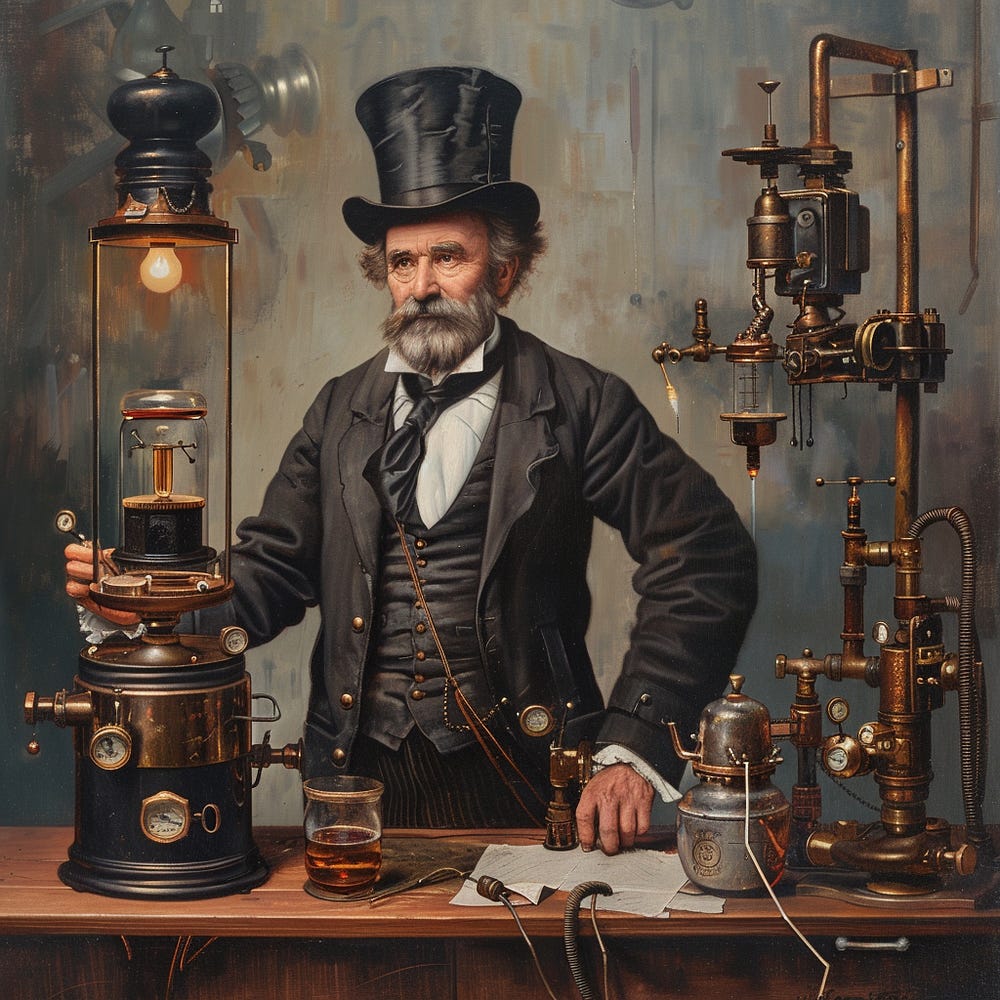

When you think of famous inventors of the modern conveniences we use daily, you think of Alexander Graham Bell, who invented the telephone; James Hansen and Alexander Catlin, who invented the refrigerator; and Alan MacMasters, who invented the toaster.
However, one of those statements is false. One was an internet hoax that two English students created solely for fun.
The hoax lasted for almost ten years and appeared all over the internet.
The BBC reported on the so-called inventor. The Washington Times wrote about his supposed invention; the Daily Mirror listed him as one of the “Top 50 British Inventors,” and hundreds of students wrote presentations about him.
Many museums and books credited him as the machine's inventor, and when the British mint was looking for a new face for a revamped fifty-pound note, he was one of the names put forward.
If his name had won the nomination process, the image they would have used would have been a doctored photo of one of the students.
Britain even has a ‘National Toast Day’ (I kid you not), on which his name regularly appeared regarding the device's invention.
Most bizarrely of all, a TV cooking competition show had a section where contestants had to make a dish honoring him.
Have you guessed which one it was yet?
A little reminder: Alexander Graham Bell, James Hansen and Alexander Catlin, or Alan MacMasters?
Maybe you think it’s got to be one of James Hansen or Alexander Catlin, as it was probably just one person who invented the fridge. Nope, the answer is Alan MacMasters.
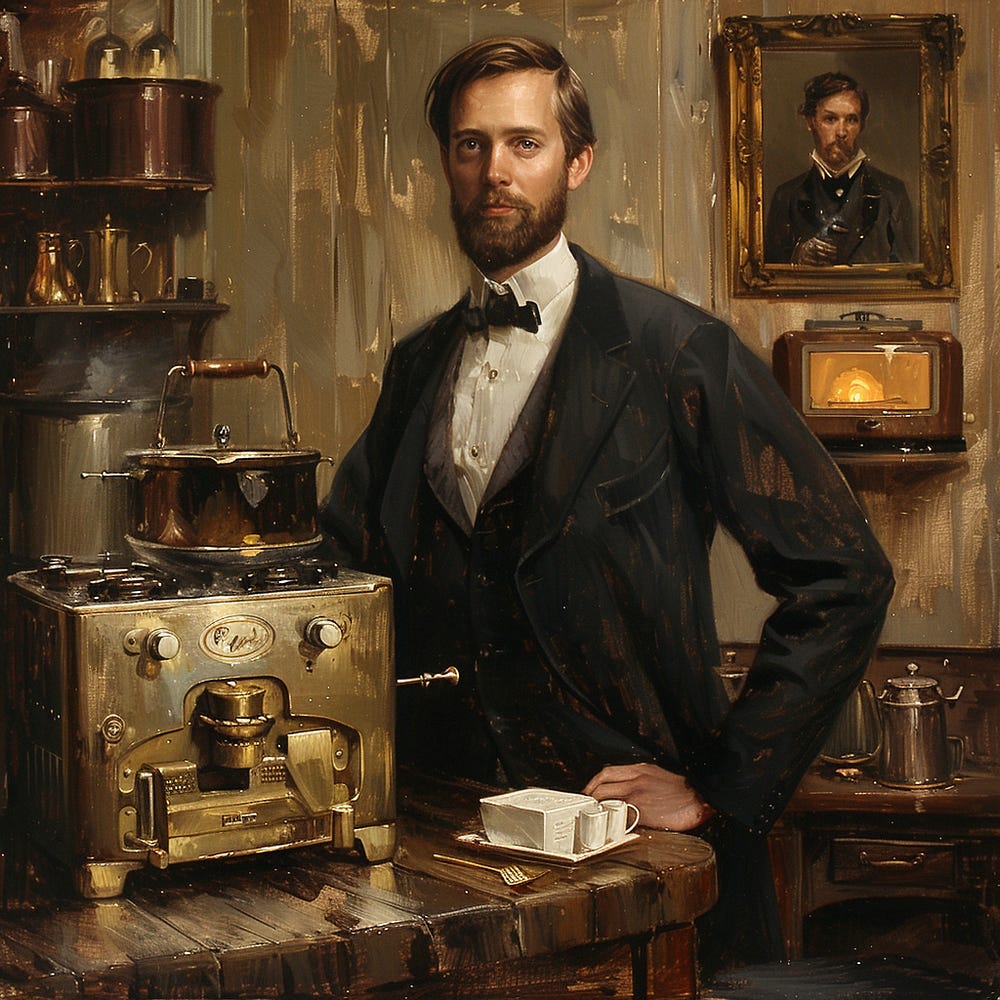

You cannot trust Wikipedia
The hoax all began when the real Alan MacMasters, then a university student, was told by his professor during a lecture that “they needed to be careful not to use Wikipedia to source information because you never know who might set themselves as the inventor of the toaster.”
The real MacMasters, along with his friend Alex, decided to have some fun with the idea.
They wrote a lengthy Wikipedia article claiming that the invented MacMasters was a Scottish electrical genius who had been instrumental in the invention and implementation of city lights installed in Glasgow’s Underground (subway) system.
MacMasters’ genius was so impressive that he was sent to London, where his lighting system was to be used in the London Underground.
While in London, he met the illustrious Rookes Evelyn Bell Crompton, a genuine inventor who established five separate companies during his lifetime. Over a bottle of Scottish whisky, MacMasters told him about an idea he’d had to save some money on his light fittings.
He had sourced cheaper metal for his lighting filaments, and while it had been a disaster, as it became far too hot, he ‘discovered’ that it, indeed, “ran so hot that his nearby bread began to brown.”
Mr. Crompton then invited MacMasters to his private laboratory, where he began working on the idea and spent the “next several months perfecting the world’s first electric bread toaster before selling the design to Crompton.”
The Eclipse toaster was introduced to the market. A few years later, MacMaster also invented the electric kettle, using the same principles as his toaster.
Hoax length
This hoax lasted for a total of 9.42 years, and it wasn’t until a Redditor thought there was something fishy about the photo used in the Wikipedia post that things began to fall apart.
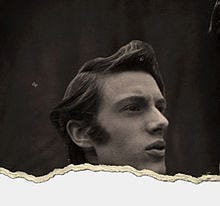
All we know about the Redditor is that he was called Adam, and he created a post on Reddit saying that the image of MacMasters was fake. Let’s look at it again.
I'm sorry that the image is so small. You can see from the tear thought that it doesn’t really look, well, correct.
Alan’s friend Alex posed for a photo, and his girlfriend quiffed his hair to make him look like he was from the 19th century; she ran the image through Photoshop, putting various black and white filters on it, and, voila, they had a believable image of a 19th-century Scottish inventor.
Our Redditor, Adam, posted his thoughts on a website called Wikipediocracy. On this website, people discuss Wikipedia articles, discussing what they think is false information, etc.
It’s a common hangout for Wikipedia editors, and soon, the authenticity of the Alan MacMaster post was being questioned.
It was soon taken down, as one of the editors looked at the uploaded photo's metadata and found that it had been edited with Photoshop.
Fallout
I’ve got to be honest. I love these types of hoaxes. They are harmless, don’t cause any harm or suffering, and just pull the wool over the eyes of many people.
But the great lesson for us all is that we simply cannot trust what we read on the Internet. We don’t always know where the information comes from, who wrote it, or what motives they may have had.
So, we need to discern where we get our information from. I mean, if a wee, fake article about the inventor of the toaster can remain on the internet, unquestioned, for almost ten years, it indeed leads to us asking ourselves, well, what else is out there that’s nonsense?
One final thing: here’s an archived version of the Alan MacMaster’s Wikipedia page: https://archive.ph/IL2ay#selection-295.56-295.63
And here’s a page regarding the hoax: https://en.wikipedia.org/wiki/Alan_MacMasters_hoax
Would you like to talk about critical thinking? Contact me here if you’d like to book a one-on-one counseling session with me.
Thanks for reading my article.
You can make a donation here, via Paypal, or via Bitcoin, or you can buy me a book here.
My different social media channels are here.